How light pollution shapes the birds you find after a fall
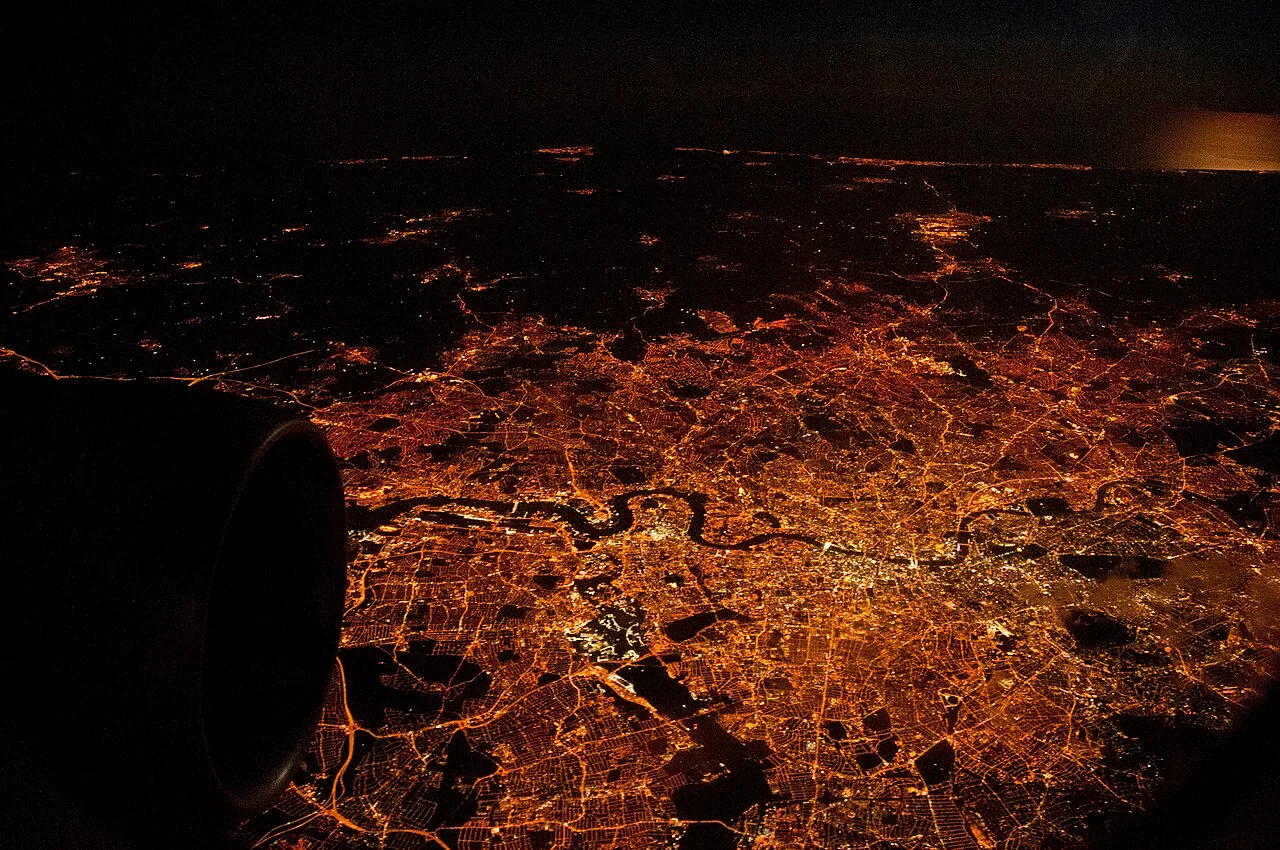
Nocturnal migrants pass overhead in darkness, correcting course by starlight and the Earth’s magnetic field. Light pollution doesn’t just threaten those birds in transit. It shapes which ones you find, how many, and where.
The scale of what’s moving
Europe’s nocturnal migration involves billions of individual journeys each spring and autumn. Warblers, flycatchers, thrushes, chats, crakes, and rails all move at night, along with waders. They fly at altitudes typically between 200 and 2,000 metres, navigating by a combination of stellar cues, geomagnetic orientation, and — increasingly — a gauntlet of artificial light.
Collision mortality is the blunt end of the problem. Illuminated buildings, communication towers, lighthouses, and offshore platforms all attract birds on overcast nights. Estimates for Europe are less precise than the North American figures (where the Smithsonian has published a commonly cited range of up to a billion annual bird deaths from building collisions across the US and Canada), but BirdLife International and partner organisations have documented mass mortality events at single structures — lighthouses on Heligoland, oil platforms in the North Sea — where hundreds of birds have died in a single night.
Collision, though, is only part of the picture. Disorientation is harder to count but probably more consequential at population level. Birds drawn into light domes circle for hours, burning energy reserves they need for the crossing, and land in suboptimal habitat where they struggle to refuel before continuing.
Cloud, light, and the fatal attraction effect
The interaction between artificial light and weather is what turns a background mortality into a mass event. On clear nights, migrants orient primarily by stars. Low cloud changes the equation. A thick overcast eliminates stellar cues and, critically, reflects artificial light back downward and sideways, vastly increasing the apparent brightness and extent of the light dome. Birds descending through cloud find themselves inside a diffuse glow with no horizon and no stars.
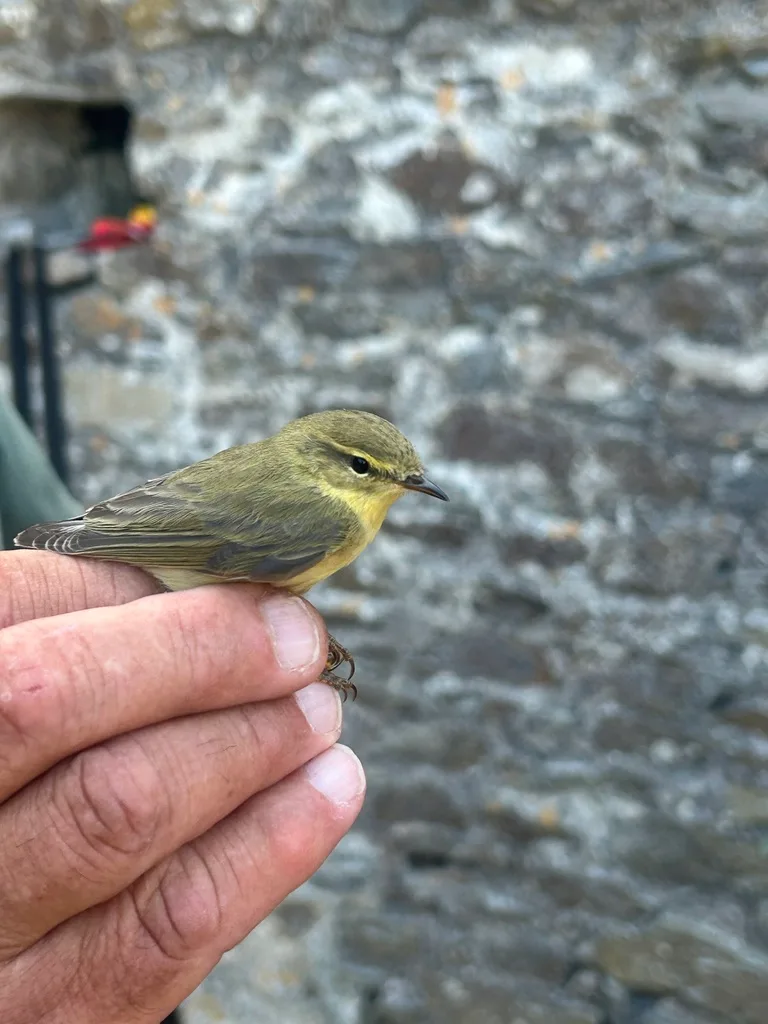
The behavioural response is well documented in radar and visual studies. On overcast nights with artificial light, birds are drawn toward light sources and may circle them for hours. The energy cost is significant. A warbler that circles a lit platform for three hours at migration speed can burn through fat reserves equivalent to several hundred kilometres of directed flight. Those that survive the night may ground in the nearest available cover at dawn, depleted and disoriented.
The common understanding (an overnight fall is caused by adverse weather pushing migrants down) is true as far as it goes. Birds grounded near illuminated coastal towns may be disproportionately drawn from species that migrate at lower altitudes where light domes are strongest.
What this means at the coast
The practical consequence for anyone working a coastal site is subtle but real. A big fall after an overcast night with onshore winds will always produce birds. But the spatial distribution of those birds — why one headland is dripping with phylloscs while another half a mile away is quiet — is influenced by the local light environment.
The orthodoxy here is to work the nearest sheltered cover to a coastline after a fall, and it’s sound. But the most productive patches often sit in the lee of the brightest local light sources: harbour walls, lit promenades, industrial compounds. Whether this concentration is good news for the birder depends on your perspective. The birds are there because something went wrong for them overnight.
There’s a less comfortable implication, too. If light pollution is grounding birds that would otherwise have continued their journey, then the spectacular falls that define autumn birding at places like the Northern Isles, Spurn, or Falsterbo may partly be artefacts of an increasingly illuminated landscape. The question is whether more birds are being forced down, more often, than they were fifty years ago.
Lights Out and what’s changing
The Lights Out concept, borrowed from North American campaigns led by groups like the Fatal Light Awareness Program (FLAP) in Toronto, is straightforward: switch off or dim non-essential building illumination during peak nocturnal passage. BirdLife International has advocated for EU-level building design standards that address bird collision risk, including reduced glass area, reduced nighttime illumination, and the use of bird-safe glass treatments.
The evidence from North American Lights Out programmes suggests measurable reductions in collision mortality at participating buildings. The harder policy fight is over permanent exterior lighting: floodlit facades, decorative uplighting, and the relentless spread of LED advertising, which is brighter per watt and often whiter in spectrum than the sodium lighting it replaces. Broad-spectrum white LED is particularly problematic because it overlaps with the wavelengths to which many passerines are most sensitive.
Building design is shifting slowly. Bird-safe glass standards exist in several jurisdictions, and retrofit options such as UV-patterned films and fritted glass are available. But the focus remains largely on daytime collision risk from transparent or reflective glass rather than on nighttime attraction.
Listening to the invisible passage
One of the most useful developments for understanding nocturnal migration, and for connecting what passes overhead with what appears on the ground, is the spread of nocturnal flight call (NFC) recording. The basic setup is a microphone pointed at the sky, recording overnight, with software to detect and classify the short contact calls that many passerines give in flight.
NFC monitoring has a long history, and recent advances in digital recording and automated classification have broadened its reach considerably. On a good autumn night at a coastal station, a single microphone can log thousands of calls — redwings, song thrushes, robins, various Phylloscopus and Sylvia warblers.
The connection to light pollution research is direct. NFC stations near urban light domes record different call patterns from those in dark-sky locations. Comparing NFC data with next-morning ground counts at the same site starts to quantify how many of the birds overhead end up grounded, and under what conditions.
For birders already invested in their local patch, an NFC station adds a dimension that daytime coverage can’t. It confirms the presence of species that skulk and are easily missed on foot. The accepted practice is to review the previous night’s recordings before heading out: a heavy passage of redwings or a scattering of scarcer calls gives you a reasonable sense of what to look for before you’ve left the house.
The view from the scrub
None of this makes a fall less thrilling. A coastal hedge full of pied flycatchers and redstarts after an October night is still one of birding’s great experiences. But understanding the role of artificial light in producing that spectacle changes the framing. Some fraction of those birds are there not because the weather was interesting but because something on the ground pulled them off course, cost them energy, and dumped them in the nearest cover.
The Lights Out campaigns, the NFC networks, the slow shift toward bird-safe building standards — these are attempts to reduce that fraction. They won’t eliminate coastal falls. But they might, over time, mean that fewer of the birds you find in the scrub arrived there because a harbour light or a stadium floodlight hijacked their navigation on a cloudy night. That seems like a reasonable thing to want, even if it means slightly quieter mornings.