Compact binoculars as a second pair
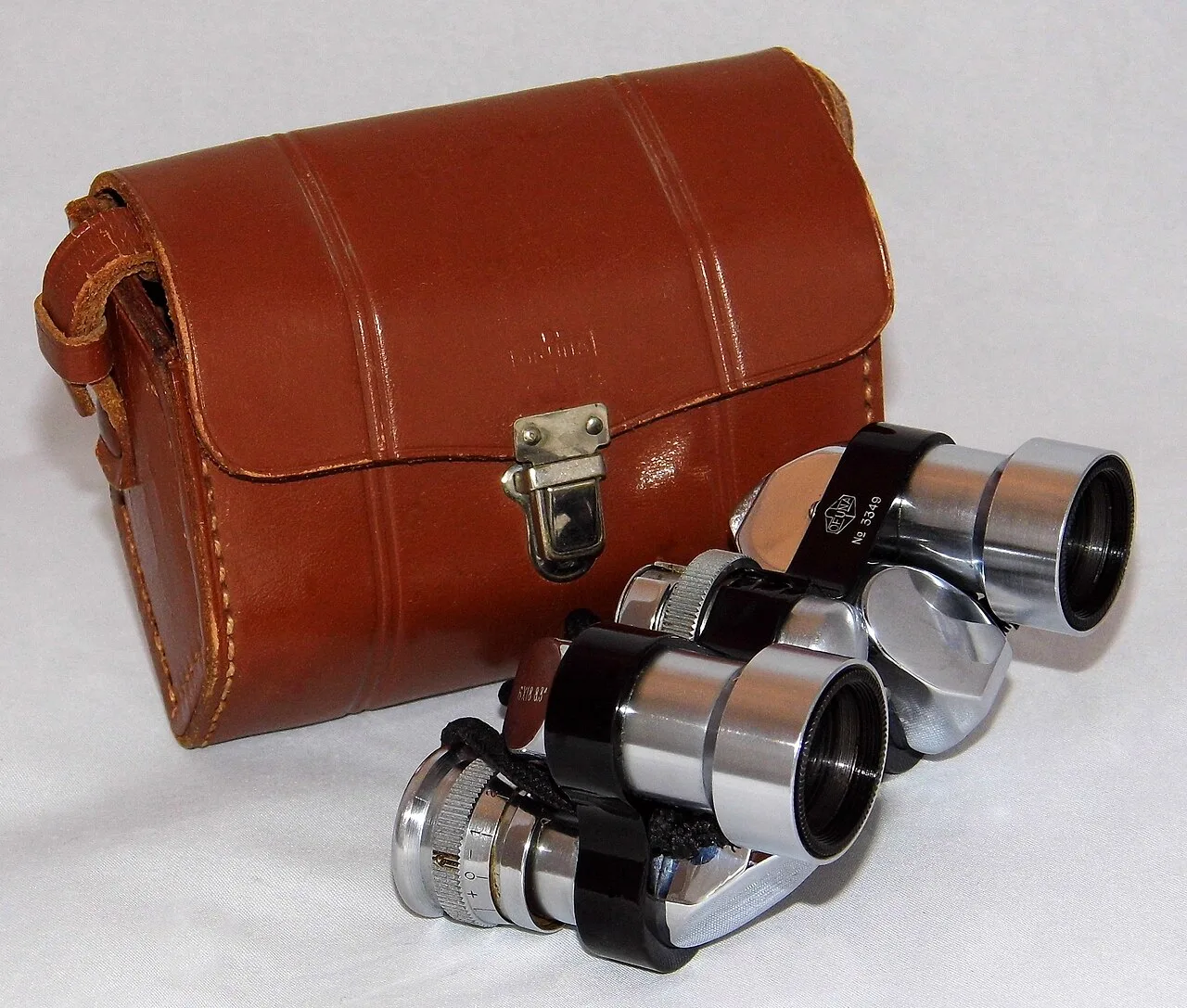
The gap in light-gathering between a 25 mm and a 42 mm objective lens is substantial, and that’s the constraint that should sit at the front of any conversation about compact binoculars. Everything else — the weight savings, the convenience, the way they disappear into a jacket pocket — follows from that single physical reality. Whether the trade-off makes sense depends less on the compacts themselves than on what you’re already carrying and where you’re going.
The case for a second pair
Full-size 8×42s or 10×42s are the right tool for serious birding. But there are days when they stay in the car, or in the bag, or at home entirely — and those are the days you miss something. A compact pair earns its place not by replacing your main binoculars but by being the pair you actually have around your neck when the main bins are impractical.
Three situations come up repeatedly. The first is travel, particularly where birding isn’t the primary purpose. A pair of 8×25s weighing 300 g fits in a daypack alongside everything else a trip demands. The second is long walks — ridge routes, coastal paths, anything where six hours on your feet makes you conscious of every gram on your chest. The third is weather. Carrying an expensive full-size pair through sustained rain is a calculation every birder makes, and sometimes the answer is to leave them protected and take something smaller, cheaper, and less painful to dry out.
There’s also the backup argument. Optics do get dropped, and a compact pair tucked in a jacket pocket means you’re never left with nothing.
What 25 mm costs you
An 8×25 compact has an exit pupil of 3.1 mm. An 8×42 delivers 5.25 mm. In bright midday light, when the human pupil contracts to around 2–3 mm, the difference is hard to notice. In low light the gap widens, because the larger exit pupil of a 42 mm objective can better match a dilated pupil, while the compact’s narrower beam cannot.

The practical effect is that compacts deliver a dimmer, lower-contrast image when light is scarce. How much that matters depends on when and where you bird.
Twilight factor tells a similar story. For an 8×25, it’s 14.1; for an 8×42, it’s 18.3. The number is a rough index of detail resolution in low light, and the gap is real but not catastrophic. It shows most when trying to pick out fine plumage detail rather than simply locating and identifying a bird.
Compacts tend toward narrower fields — often 6.0–6.5° for an 8×25, against 7.0–8.0° or wider for a good 8×42. That narrower view is a real handicap in dense cover, where quick acquisition matters most.
Reverse-Porro versus roof
Compact binoculars come in two broad designs, and the choice between them is more consequential than it is in full-size pairs.
Roof-prism compacts fold the light path into a straight barrel, producing the slim, flat profile that makes them pocketable. The optical path is more complex, requiring phase coatings to correct for the way the roof surface splits the light beam. Without phase correction, resolution suffers. If you’re considering a roof-prism compact, confirming that phase coatings are present is the single most important specification check.
Reverse-Porro designs (sometimes called “compact Porro”) use a modified Porro prism arrangement where the objectives are closer together than the eyepieces, giving compacts their distinctive narrow-fronted shape. At a given price, they often deliver better light transmission and contrast than an equivalent roof-prism compact, because fewer surfaces need coating.
The trade-off is bulk. Reverse-Porro compacts are wider and less elegant in the pocket. For a pair living in a jacket and getting pulled out quickly, portability and durability matter more than marginal optical gains. Roof-prism compacts win on those counts; reverse-Porro compacts win on optics-per-pound-spent.
Carrying two pairs without suffering
At 250–350 g, even the heavier compact examples aren’t a significant burden on their own. The real problem is management: two straps, two cases, two things swinging around your chest.
A binocular harness for the main pair solves most of this, and some harness systems accommodate a second, smaller binocular on a short tether — typically a chest harness with a spare attachment point or accessory clip on one of the shoulder straps, so the compact hangs clear of the main pair rather than swinging against it. Alternatively, the compact pair can go on a simple wrist strap and live in a chest pocket or belt pouch.
The worst arrangement is two neck straps. Most people discover this quickly. A harness for the full-size pair and a pocket or pouch for the compact is a more practical setup.
When a compact is the wrong answer
If you find yourself reaching for compacts because your main binoculars are too heavy for regular use, the better solution is often a lighter full-size pair rather than a second instrument. Several well-regarded 8×42 roof-prism models now sit at or below 600 g, with none of the optical compromise a compact demands.
Compacts also make less sense for anyone whose birding is primarily static: hides, seawatching points, garden feeders. In those settings the main pair is always to hand, and a compact adds nothing except a lighter wallet.
The same logic applies to dedicated birding trips. Full-size optics are part of the commitment when travelling specifically to bird a region. A compact pair as insurance against loss or damage is reasonable, but as the primary tool for a week on Lesvos or Fair Isle, 25 mm objectives will leave you frustrated when the light drops or a skulking warbler demands every photon you can gather.
Spec comparison
| Typical 8×25 compact | Typical 8×32 mid-size | Typical 8×42 full-size | |
|---|---|---|---|
| Exit pupil | 3.1 mm | 4.0 mm | 5.25 mm |
| Twilight factor | 14.1 | 16.0 | 18.3 |
| Weight range | 250–350 g | 400–550 g | 600–850 g |
| Pocketable | Yes | Not easily | No |
The 8×32 mid-size category splits the difference in ways that suit some birders better than a true compact. It gathers enough light to be useful into the evening and sits noticeably lighter than a full-size pair, though it’s too large for a jacket pocket. For birders whose complaint is really about weight rather than portability, a mid-size pair as a primary instrument can eliminate the need for a second binocular entirely.
Making the decision
A compact pair is a genuine compromise, and the compromise cuts differently depending on when you bird. It won’t match your main bins at dawn, in woodland, or on anything that demands fine plumage detail in poor light. What it will do is be there — on a family holiday, a mountain walk, a wet November afternoon when you’d rather not risk your good glass. Compacts have a way of being that binocular more often than the spec sheet would suggest they deserve.
A 10×25 compact, incidentally, drops the exit pupil to 2.5 mm and narrows the field further. For a second pair carried as backup or travel insurance, 8×25 is the more forgiving magnification. Save the higher power for the instrument with the glass to support it.
Sources
Specifications and references drawn on for this article.
- The Best Affordable Compact Binoculars (8×32): Our Reviewallaboutbirds.org
- Maven C1 8×42 Binoculars: Our Reviewallaboutbirds.org